What Is OEKO-TEX, and Why Does It Matter for Silk?
You've probably seen the little OEKO-TEX label before — on baby clothes, bedding, maybe even the tag on a t-shirt. But most people have no idea what it actually certifies, or why it matters even more when it comes to something you wear directly against your skin, like silk.

So, What Is OEKO-TEX?
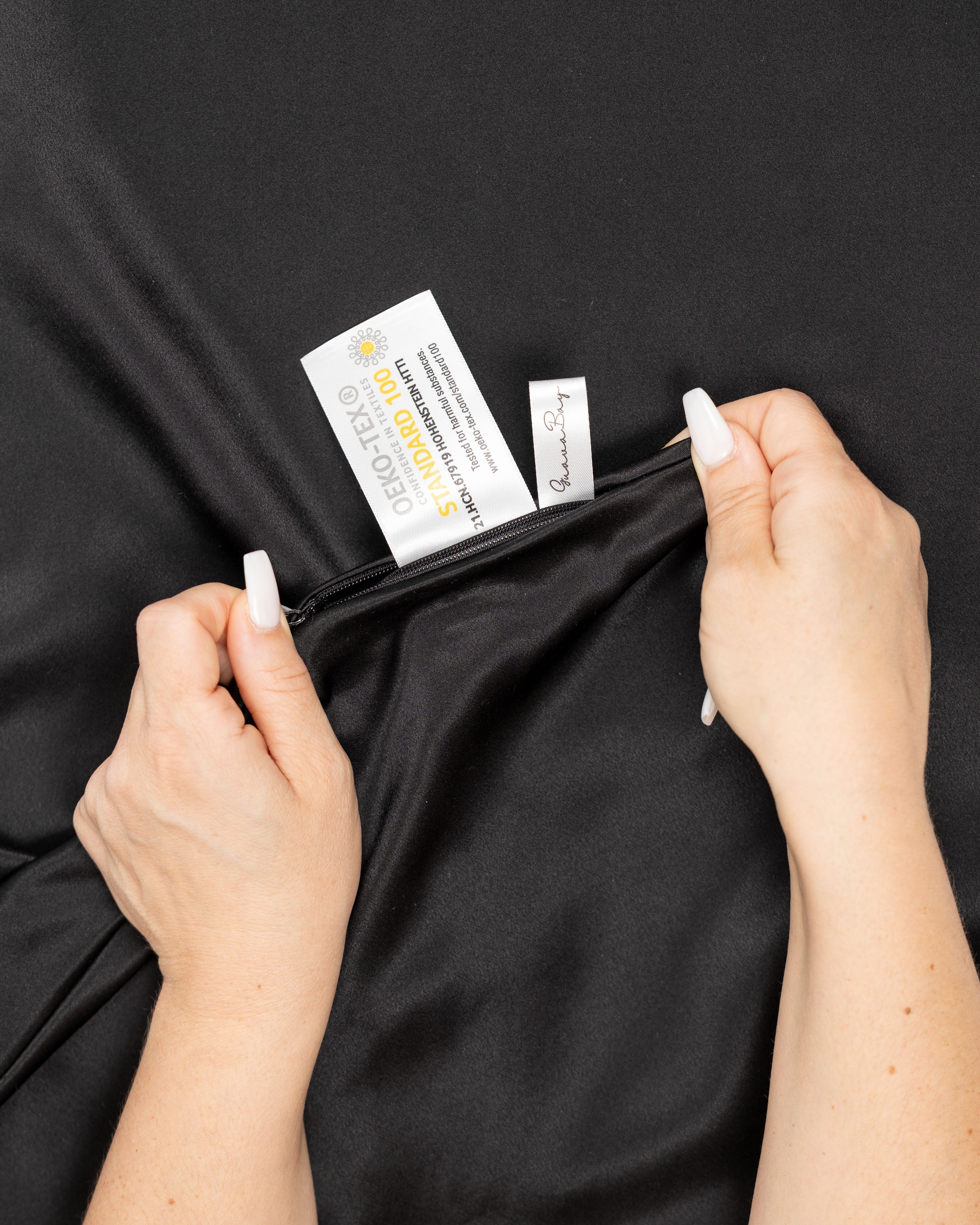
OEKO-TEX is an independent certification system that tests textiles for harmful substances. It's not a marketing badge a brand can slap on itself — every product has to pass laboratory testing by an accredited, independent institute before it can carry the label.
The most common certification, STANDARD 100 by OEKO-TEX, checks for hundreds of regulated and unregulated chemicals: heavy metals, pesticide residue, formaldehyde, allergenic dyes, and more. If a single component fails, the whole product fails.

Why It Matters More for Silk
Silk has a reputation as a "natural" and "clean" fabric — but the raw fiber is only part of the story. A lot happens between the silkworm and the finished product: dyeing, bleaching, finishing treatments. Any of these steps can introduce chemicals that stay in the fabric long after it leaves the factory.
That matters a lot when the fabric touches your skin or hair for hours at a time — like a scrunchie you wear to sleep, night after night. Low-grade silk producers often skip rigorous testing altogether, because it's expensive and slows things down. Cutting that corner is invisible to the customer, until it isn't.
Where Guava Bay Stands
Every piece of silk we use is OEKO-TEX certified. That's not a detail we treat as optional — it's part of the same standard that led us to 30 momme silk in the first place: if we can't verify it's actually safe and high quality, we don't use it.

The Takeaway
The OEKO-TEX label isn't just a nice-to-have. It's one of the only ways to actually verify that what touches your skin and hair every day is free from the substances that shouldn't be there. Next time you're shopping for silk, look for it — and if a brand can't tell you whether their silk is certified, that's worth asking about.