Inside the Factory: Mel Sits Down With Kat to Talk Silk
Silk looks simple from the outside — smooth, lightweight, uniform. But by the time it reaches a finished scrunchie or pillowcase, it's gone through a long chain of decisions, any one of which can quietly downgrade the final product. So Mel hopped in a car with Kat, who works directly with our silk supplier, to get the real answers — no filter.

Mel: Okay Kat, be honest — where does the quality of a silk product actually get decided? Is it the weaving? The finishing?
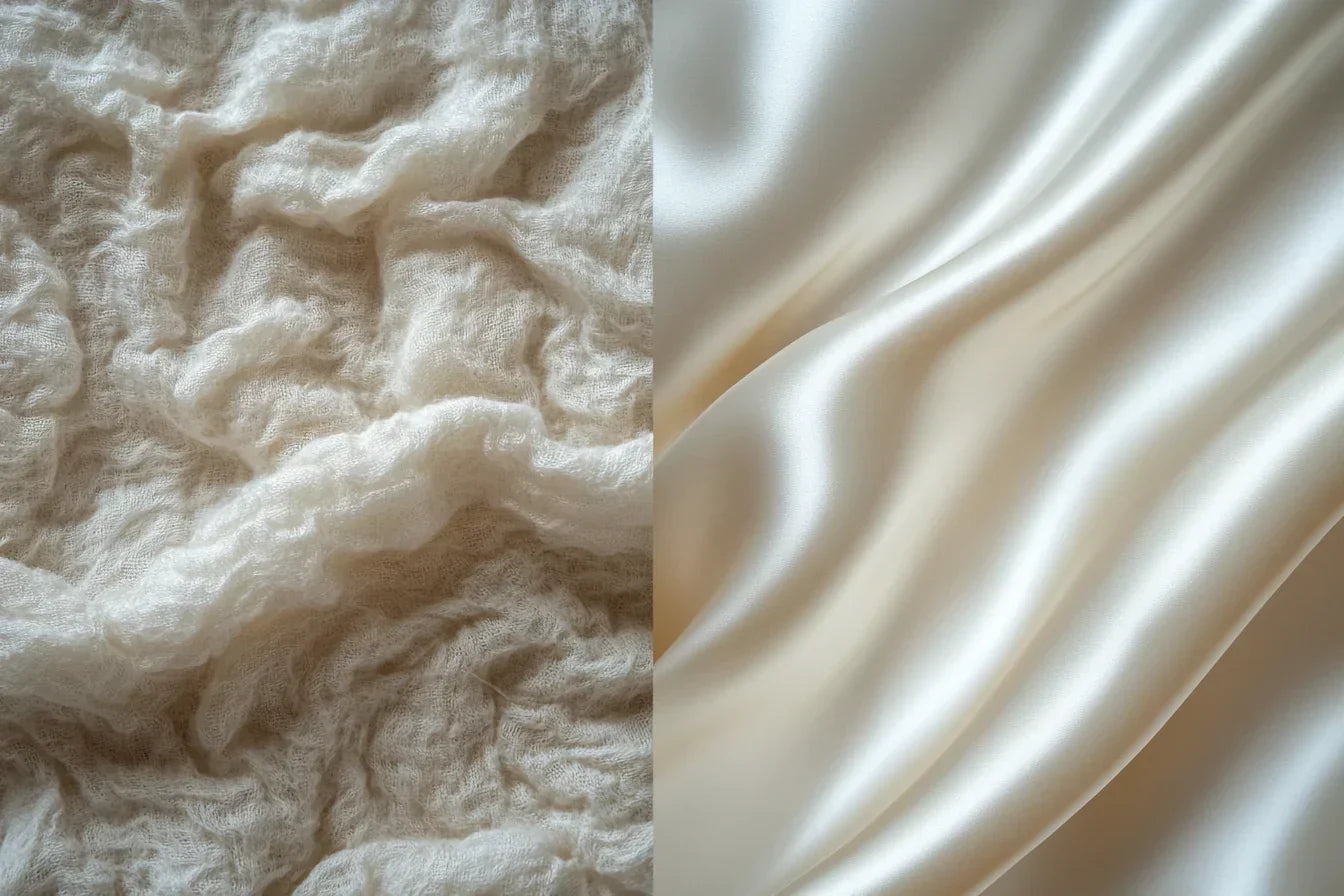
Kat: Earlier than that, honestly. It starts with the cocoon. Not all cocoons are equal — they get graded before anything is even spun, based on fiber length, thickness, consistency. Lower-grade cocoons give you shorter, weaker fibers that have to be pieced together more during spinning. That's already a weaker fabric before it's even woven.
Mel: So a factory trying to hit a rock-bottom price...
Kat: ...is blending in the lower-grade cocoons. Every time. It's the first place cost-cutting shows up, and most people never see it.
Mel: So does that mean the Momme will depend on the density of the... fiber itself?
Kat: Exactly. Momme is basically the clearest paper trail for everything that happened before it. A thin, low-momme silk isn't "less silk" chemically — it's just less material, or lower-grade material, packed into the weave.
Mel: 16 or 22 momme?
Kat: Either one is putting less thread into the fabric than 30 momme does. More thread means more density, which means it holds shape, resists tearing, and doesn't go thin after a few washes.
Mel: So does it mean... is it the highest level of silk?
Kat: It's high — but "highest" isn't really the right way to think about it. It's the sweet spot. You could go even heavier, but past a certain point it stops feeling soft and starts feeling stiff. 30 is where density and comfort actually balance.
Mel: Wait — you do or can we do even more?
Kat: We can, technically. But more momme isn't automatically better once you're already at 30. It's a trade-off, not a race.
Mel: Okay, real talk — is all silk the same type, or is that a myth?
Kat: Total myth. Mulberry silk is the top tier — silkworms fed only mulberry leaves, which gives you the longest, most uniform fibers. Then you've got tussar and eri silk, which are wild or semi-wild — coarser, less consistent, usually ending up in cheaper blends. And then there's the stuff that's barely silk at all — synthetic fiber with a tiny percentage of real silk mixed in, marketed with vague labels so you can't tell the difference from a product photo.
Mel: So the type matters just as much as the momme number.
Kat: More, in some cases. A high momme number on a bad silk type still isn't great fabric.

Mel: Does the process stop once you've picked the right fiber?
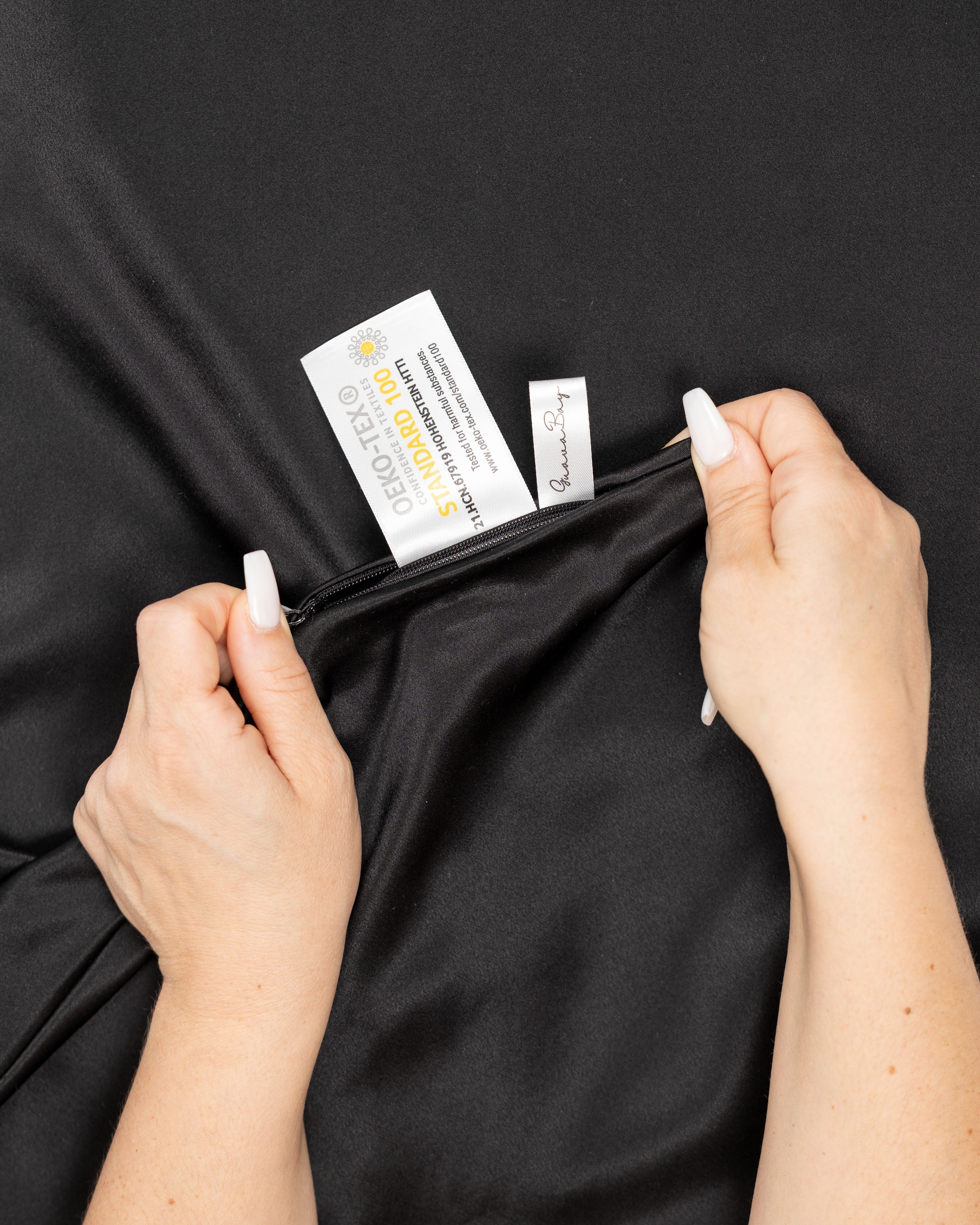
Kat: Not even close. Weaving tightness, finishing treatments, testing afterward — all of it still affects the final product. That's also where certifications like OEKO-TEX come in. They're not testing the raw fiber, they're verifying nothing harmful got introduced during those later steps.
Mel: Why do we even bother flying out here to see it in person instead of just trusting what a supplier tells us?
Kat: Because "quality" is a free word. Anyone can put it on a label. Watching the actual grading, spinning, and finishing happen in front of you is the only way to actually stand behind it instead of just repeating it.

Mel: Okay, one more — why is SO much of the world's silk from China specifically?
Kat: It's basically where silk farming was invented, thousands of years ago. The grading, the reeling, the weaving — all refined over generations, concentrated in a handful of regions like Hangzhou, Suzhou, Zhejiang. That's not luck, that's just centuries of specialization nobody else has had time to catch up on. Something like 80% of the world's silk still comes out of China today.
Mel: And that's why it has the reputation it does?
Kat: Pretty much. Even the momme system itself became the global standard through this industry. When a region's been perfecting cocoon selection for generations, that's a different starting point than someone trying to compete purely on price.
The Takeaway
Next time you're comparing silk products, remember the visible stuff — feel, sheen, price — is all downstream of decisions made way earlier: which cocoons, which fiber, how tight the weave, how it's finished. A momme number and a real certification are about as close as you'll get to a paper trail for all of it.