Article: What Is Momme? The Silk Number Nobody Explains (But Should)
What Is Momme? The Silk Number Nobody Explains (But Should)
If you've shopped for silk anything — pillowcases, scrunchies, sleep masks — you've probably seen the word "momme" thrown around. Most brands mention it once, in small print, and move on. We think it deserves better, because it's actually the single biggest factor separating real silk from silk-branded disappointment.

So, What Is Momme?
Momme (pronounced "mom-ee") is a unit that measures the weight and density of silk fabric. It tells you how much 100 yards of silk, 45 inches wide, actually weighs in pounds. The higher the number, the denser, heavier, and more durable the fabric.
Think of it less like a marketing term and more like a thread count for cotton sheets — except far more revealing, because silk quality varies wildly depending on how it's woven and finished.

Why the Range Matters
Most silk products on the market fall between 12 and 19 momme. That's thin enough to feel silky at first touch, but thin enough to also:
- Tear or snag easily
- Lose shape after a handful of washes
- Absorb the natural oils it's supposed to protect
At 30 momme, everything changes. It's dense enough to hold its shape wash after wash, resist creasing overnight, and actually last years instead of months — without losing that soft, fluid feel silk is known for.
Why We Only Work With 30 Momme
When we set out to make Guava Bay scrunchies, the goal was simple: no shortcuts. That meant refusing to use the thinner, cheaper silk that dominates the market — even though it would've been easier and less expensive to source.
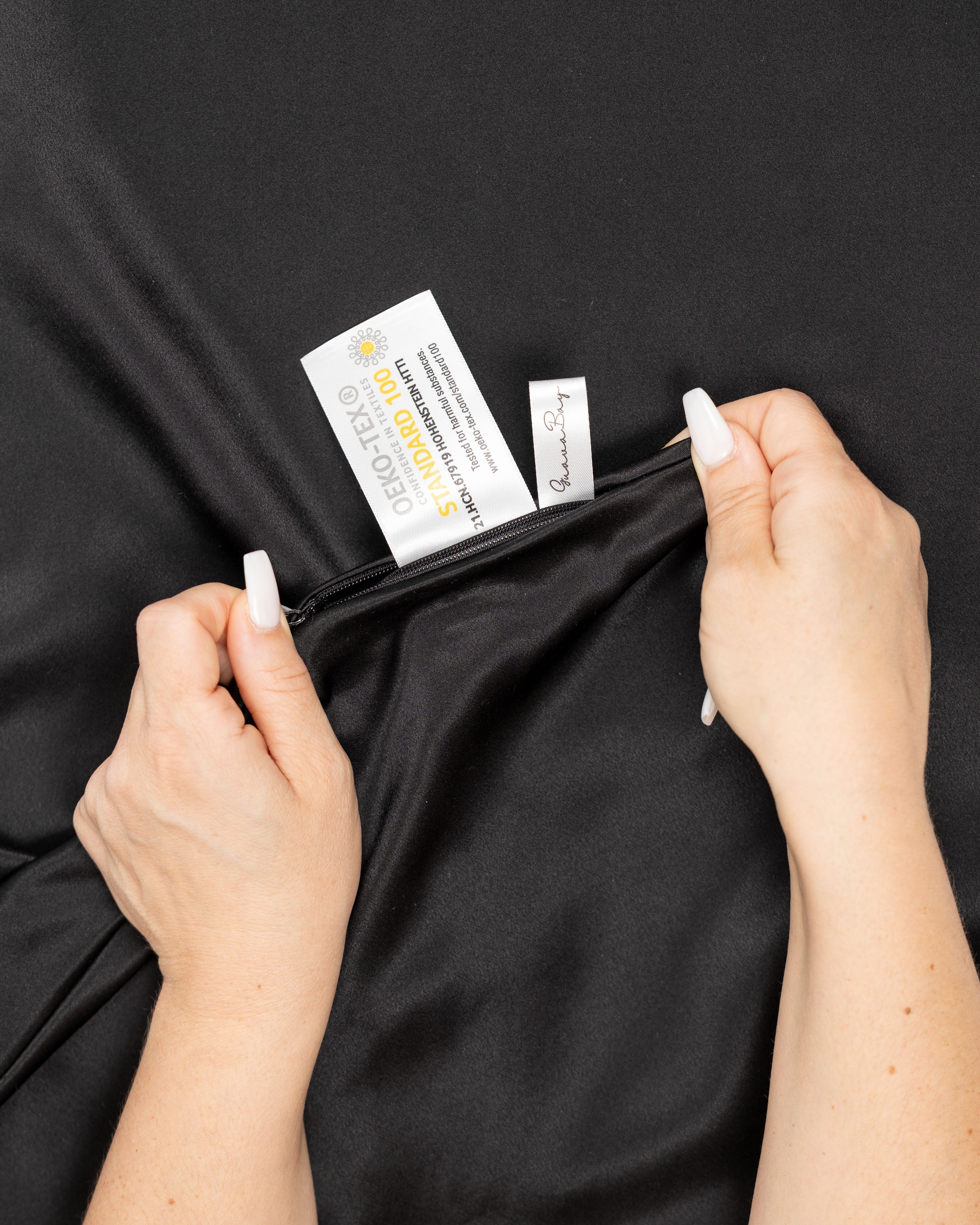
Every Guava Bay piece is made in 30 momme silk. No exceptions, no lighter "budget" version hiding in the lineup. It's the standard we hold every single product to, because anything less isn't really solving the problem silk is supposed to solve in the first place.

Momme Isn't the Whole Story — Grade Matters Too
Momme measures weight and density, but it doesn't tell you anything about the quality of the fiber itself before it's even woven. That's where grade comes in. Silk is classified on a scale, and most of what's sold as "silk" never gets close to the top of it.
We use 6A grade mulberry silk exclusively — the highest classification available, reserved for the longest, most uniform fibers with the fewest imperfections. A lower grade can still hit a decent momme number on paper, but it'll show its weak points sooner: uneven texture, more frequent snagging, a duller finish over time.
Momme and grade answer two different questions — how much material is there, and how good is that material to begin with. We didn't think it made sense to get one right and ignore the other.

The Takeaway
Next time you're shopping for silk — from us or anywhere else — ask what momme it is. If the answer isn't clearly listed, that's usually a sign it's on the lower end. And if it is listed, now you'll know exactly what that number means for how it'll actually perform.