The Art of Rest: Why Silk Actually Changes How You Sleep
Most people think of silk as a texture — something soft, something that feels nice against skin for a moment before you fall asleep. But the real difference isn't in how it feels at 11pm. It's in what it does, or doesn't do, to your skin and hair over the eight hours after that.

Cotton Absorbs. Silk Doesn't.
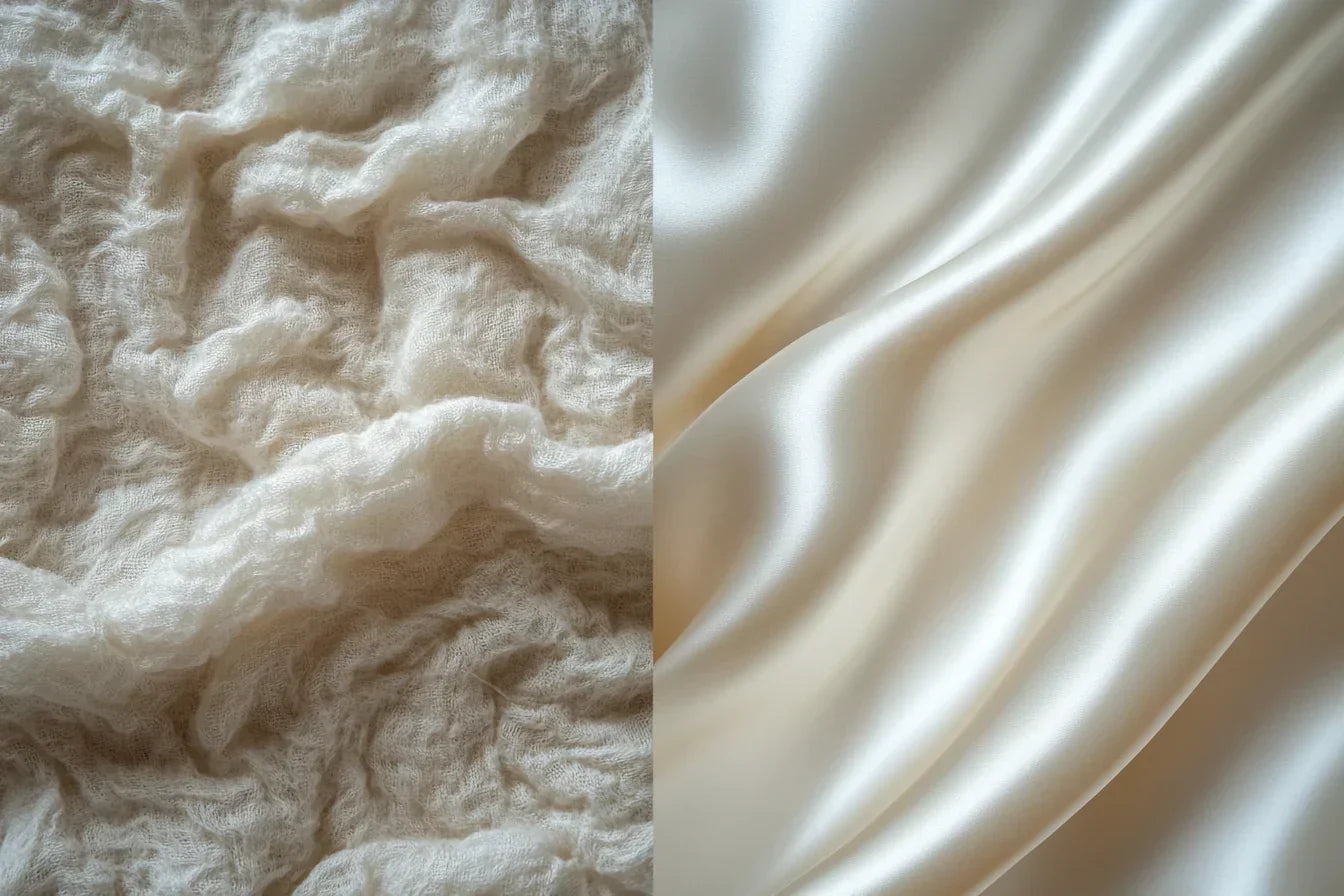
Cotton is a natural fiber built to soak things up — it's why it's so good at towels and bedsheets in the first place. But that same absorbency works against you overnight. A cotton pillowcase pulls moisture out of your skin and oil out of your hair as you sleep, leaving both drier than when you went to bed.
Silk's fiber structure is different. It's smoother and far less absorbent, so the moisturizer you applied and the natural oils your hair produces stay where they're supposed to — on you, not soaked into your pillowcase.
Less Friction Means Less Damage
Run your hand across cotton, then across silk. The difference in surface texture isn't just about comfort — it's about friction. Every time you move in your sleep, your hair and skin drag against the fabric underneath. On cotton, that friction is high enough to cause tangling, breakage, and the frizz that seems to appear overnight for no reason.
On silk, hair glides instead of catching. That's the entire mechanism behind fewer tangles and less frizz — it's not a marketing claim, it's just physics.

The Pillow Crease Nobody Talks About
If you've ever woken up with a deep line pressed into your cheek that takes an hour to fade, that's also friction — your skin held tightly against a rough fiber for hours, unable to move naturally as you shift positions. Silk's smoother surface lets skin move slightly instead of staying pinned, which is a big part of why the fabric is so often recommended for reducing sleep-created wrinkles over time.
Naturally Resistant to Bacteria and Allergens
Silk has one more advantage that rarely gets mentioned: its protein structure, built around sericin, is naturally resistant to dust mites, mold, and bacteria in a way synthetic and cotton fibers aren't. Combined with the fact that it doesn't trap moisture the way cotton does, silk creates a less hospitable environment for the bacteria that thrive in damp, oil-soaked fabric — which is part of why it's often recommended for sensitive or acne-prone skin, and for people prone to allergies.
It's not a substitute for washing your pillowcase regularly, but it does mean you're starting from a cleaner baseline every night, instead of sleeping face-down in a fabric that's been quietly collecting oil, product residue, and bacteria all week.

It's Not Just About Vanity
None of this is about chasing a beauty ideal — it's about not undoing, every single night, the work you've already put into your hair and skin during the day. A wash-day style that survives the week. Moisturizer that actually stays on your face until morning. Curls that don't need to be re-done from scratch every single day.

The Takeaway
Silk's benefits for hair and skin aren't a bonus feature — they're a direct result of the fiber itself absorbing less and creating less friction than cotton. It's a small swap with a compounding effect: every night it doesn't dry out your skin or rough up your hair is a night your morning routine gets a little shorter.